
How Steel Fighters parts work: the six-slot rule, the +10% Perfect trait, where parts come from, how Luck affects pulls, and what fusion documents.
Steel Fighters Parts and Fusion: Six Slots, Perfect Trait, Index
Steel Fighters is a part-collection game wearing a fighting-game costume. You do not level a single hero; you assemble robots out of six parts each, drawn from a pool spread across 100+ robots, and the set you complete decides how far the arena lets you go.
This page covers the rules the game actually states — six slots, the Perfect trait, part sources, Luck, the Index, and what fusion does and does not document — and marks everything else as unconfirmed rather than inventing stats.
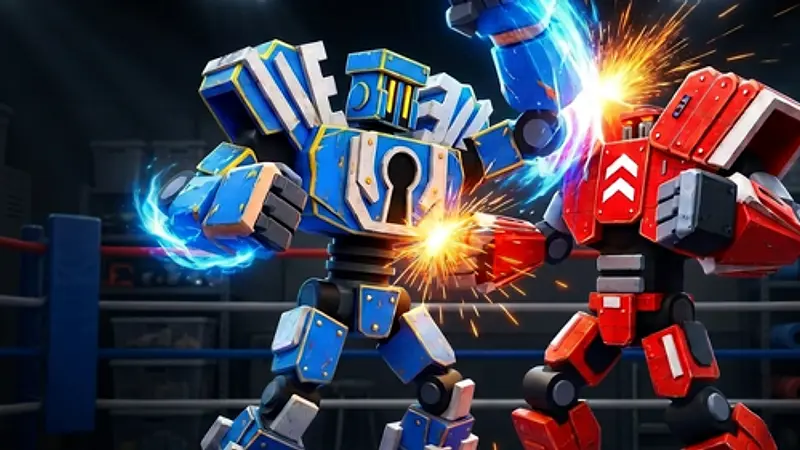
How a Robot Is Assembled
Every robot takes six parts. Community descriptions consistently describe them as a head, a torso and limbs, but the exact in-game slot names are not published anywhere reliable, so treat the slot count as the fact and the labels as shorthand.
| Property | What is confirmed | Status |
|---|---|---|
| Slots per robot | 6 | Confirmed by multiple sources |
| Slot names | Head / torso / limbs described | Shorthand, exact names unpublished |
| Mixing parts across robots | Allowed | Confirmed |
| Same-robot full set | Triggers Perfect trait | Confirmed |
| Perfect bonus | +10% to all stats | Confirmed |
| Part stats and rarity labels | Not published | Community-unconfirmed |
The important consequence: parts are fungible across robots. You are never locked into one fighter, and a part you pull today can finish a set you started last week. That is why hoarding set pieces beats selling them.
The Perfect trait: the only hard stat rule
If all six parts on a robot come from the same source robot, the build gains Perfect: +10% to every stat. Update 1 added the trait and made it apply retroactively, so robots you built before the patch also receive it.
This single rule is the most valuable thing on this page. It means:
- Completeness beats tier. Six low-tier matching parts get a flat +10%; five high-tier parts plus one stray get nothing.
- Your first goal is always six slots, same robot. Not "the best part", not "the highest tier" — a closed set.
- Selling a set piece can cost you a permanent 10%. Scrap is renewable; a specific part is not.
There is no published exception to the rule, and no published stacking behavior beyond the single +10%. Anyone quoting a different Perfect percentage is guessing.
Where Parts Come From, and How Luck Changes the Odds
| Source | What you get | Cost / limit |
|---|---|---|
| Lever machine | Random parts, tier selectable via Early parts | Scrap per pull |
| Liking the game | Free robot | Once per account |
| Joining the group | Free robot | Once per account |
| Favoriting the game | Free robot parts | Once per account |
Code AT0M3 |
Atom robot + 1 Golden Dice | Once per account |
| Index tier completion | Reward + permanent boost | One per completed tier |
| Black Hole (Space) | Rewards in exchange for parts | Consumes parts |
| Fusion | Upgraded output | Rules unpublished |
The lever is the main engine, and it is the only source with a documented modifier: Luck.
Luck: the only documented pull modifier
Luck affects what the lever gives you. The game does not publish odds, thresholds or a curve, so the honest advice is "stack Luck before you pull, and pull in batches" rather than "you need X Luck for Y tier".
Known Luck sources:
- x2 Luck game pass — doubles your Luck stat.
- Lucky Lever server event — the whole server gets x3 lever Luck for 2 minutes 20 seconds.
- Timed code boosts —
LUCKY(30 minutes of Luck plus 2 rerolls) andTOSPACE(15 minutes of Luck and Money). - Four titles — Lever Lord +9%, Master Builder +14%, Dice Master +18%, Collector +22%.
Because every source is multiplicative or additive on an unpublished base, there is no way to compute a "best" Luck number. What you can do is avoid pulling during a dry spell with no boost active: a Lucky Lever event is free, and pulling outside one wastes the same Scrap for worse expected parts.
Fusion and Upgrades: What Is Documented
Fusion exists. Two titles prove it: Fusion Master requires 30 fusions, and Engineer requires 500 robot upgrades. Destructoid's coverage adds that pushing a robot toward an elite chassis costs significant Scrap and Cash.
That is the entire verified surface. Specifically not published by the developer or any reliable source:
- Fusion input requirements (how many parts, which tiers, whether duplicates only).
- Fusion success rates or guaranteed outcomes.
- What an upgraded part gains, numerically.
- Whether fusion can destroy the input parts.
Given that, the safe approach is:
- Only fuse duplicates. Never fuse a part that is your only copy of a set piece.
- Fuse after you have a complete main robot. A finished six-part set is guaranteed value; fusion is speculative.
- Treat the first few fusions as experiments. Note what changes, because the community is still building this table.
- Do not chase Fusion Master early. Thirty fusions is a mid-game goal that costs fodder you need for sets.
If a site gives you exact fusion recipes or success rates for Steel Fighters, it is either datamining without saying so or making it up. This page will add the table the moment a verifiable source exists.
The Index, Early Parts, and Rarity
Update 1 added two quality-of-life systems that change how you should pull:
- Index — lists every robot by tier. Completing an entire tier grants a reward plus a permanent boost. The boost's magnitude is not published, but permanence makes it worth prioritizing over a single high-tier part.
- Early parts — a lever setting that lets you choose which tier you roll from. The exact options and their odds are not published.
Practical use: pick the tier where you are closest to completion, set Early parts to that tier, and pull until the set closes. Then move up. Chasing the top tier with an empty Index is how accounts end up with six great parts from six different robots and no Perfect bonus.
Rarity: what you can and cannot trust
The game shows parts from different tiers, and the Index groups robots by tier. Beyond that, no rarity labels, drop weights or stat ranges are documented.
So when you evaluate a part, use observable facts instead of a rarity claim:
- Does it close a set you already have pieces for?
- Is it from a robot whose tier you are completing in the Index?
- Is it a duplicate you can safely fuse?
- Did you pull it during a Luck boost?
Four answerable questions beat one unverifiable rarity tier.
FAQ
How many parts are in a Steel Fighters robot? Six. All six from the same robot triggers the Perfect trait.
What does Perfect do? It grants +10% to all stats and applies to robots built before Update 1 as well.
Can I mix parts from different robots? Yes, freely. You just lose the Perfect bonus unless all six match.
Does Luck affect fusion? Unknown. Luck is documented as affecting lever pulls; no source confirms an effect on fusion.
What is the fastest way to complete a set? Use the lever's Early parts setting to target the tier where you already hold the most pieces, and pull during a Luck boost or a Lucky Lever event.
Related Guides
- Tier list — how to judge a set without datamined stats.
- Cash and scrap — how to fund lever pulls.
- Beginner guide — build your first complete robot.